Creating an Angel
This is the story of how a window of light became a sculpted work of depth and shadow.
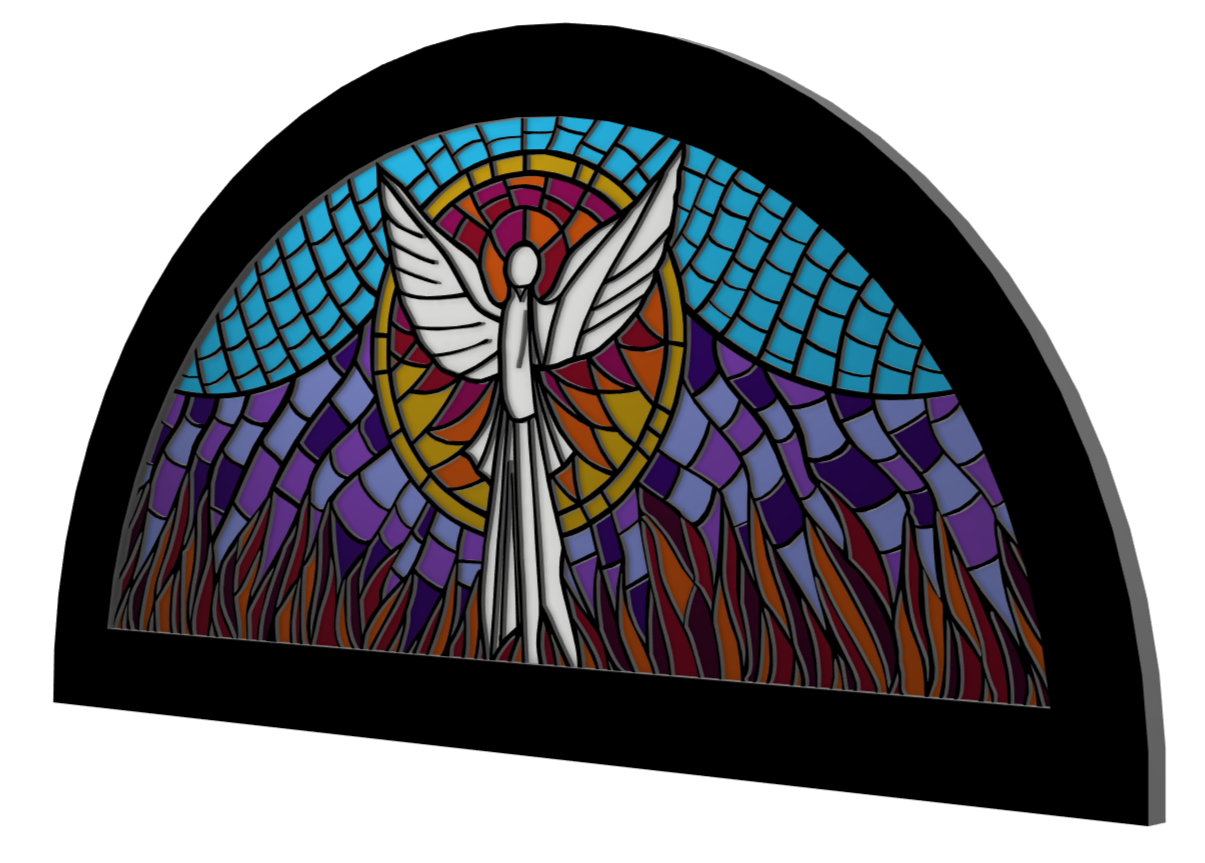
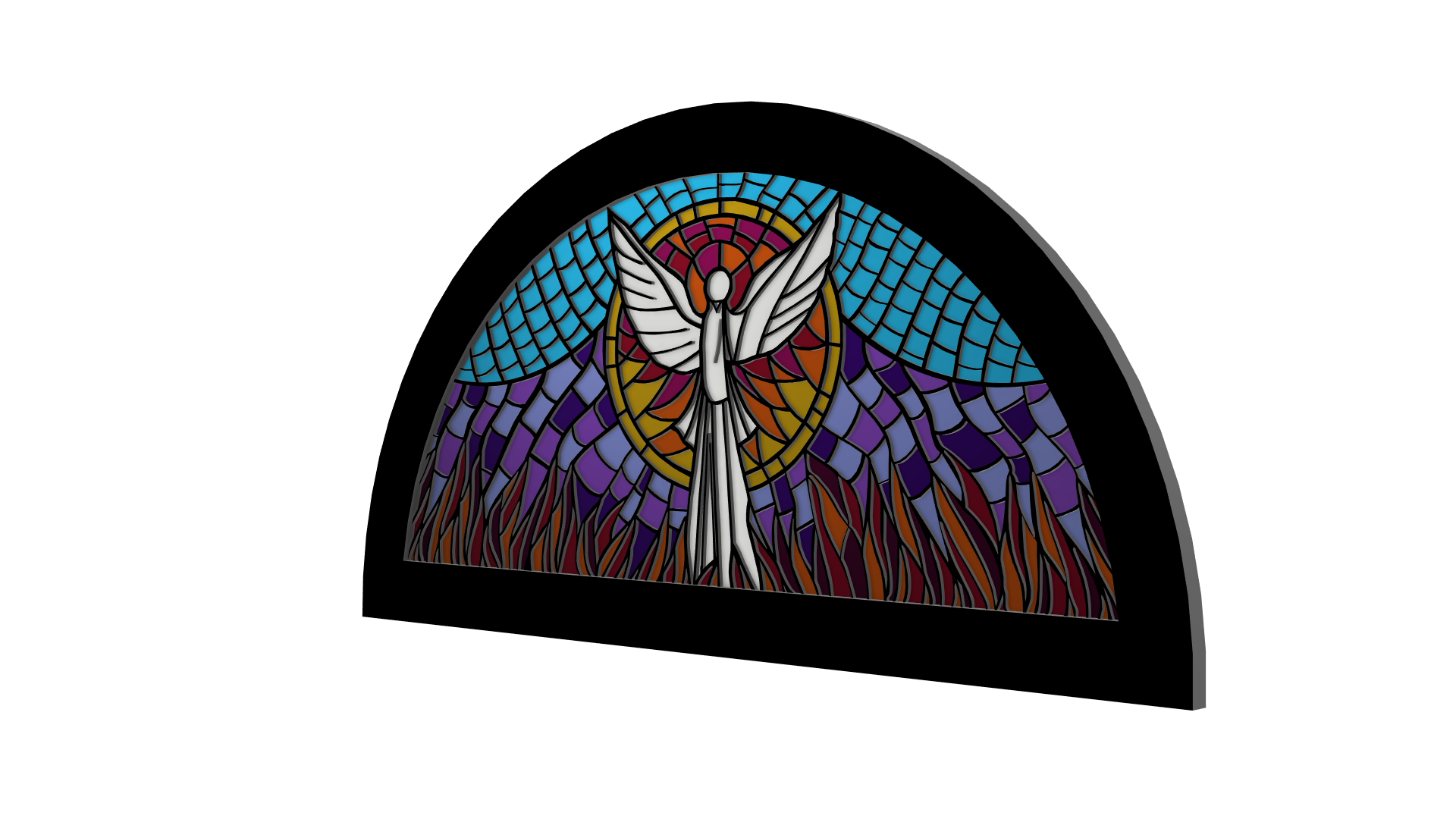
What began as a vibrant stained-glass depiction of Pentecost — filled with radiant colour, flame, and symbolism — was reimagined as a layered three-dimensional relief. The central winged figure and rising flames were no longer confined to glass, but rebuilt with structure, hierarchy, and form. It was not about copying an image, but transforming light itself into something dimensional, engineered, and alive through shadow.
Creating an Angel
A Bespoke 3D Relief Inspired by Stained-Glass Design
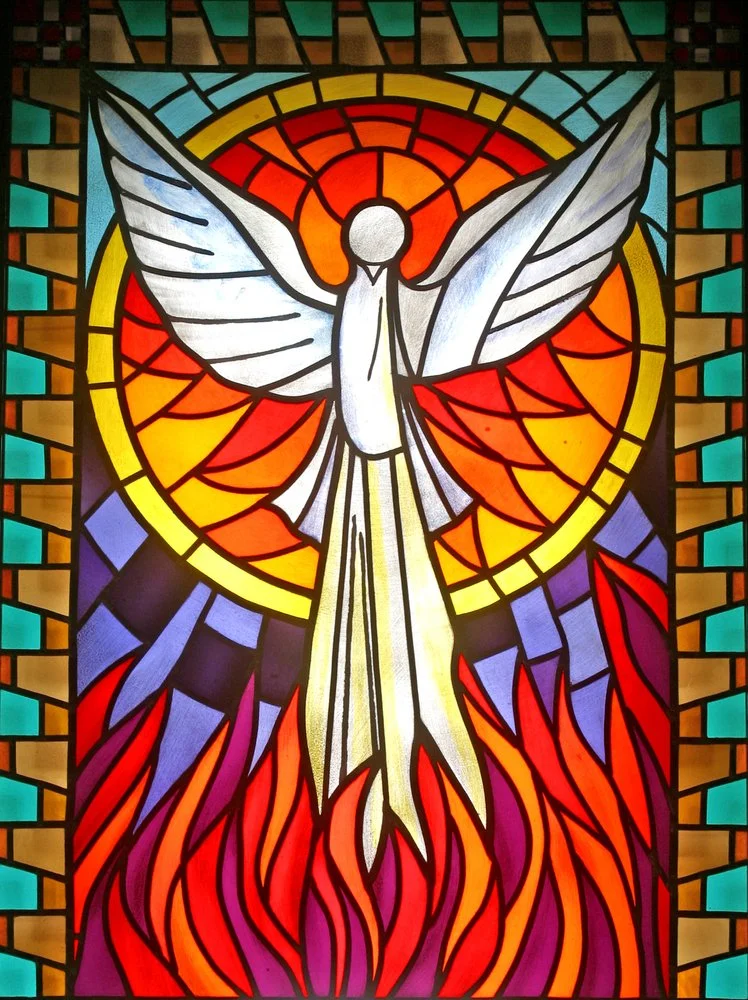
This project began with a traditional stained-glass window depicting Pentecost — the descent of the Holy Spirit.
At the centre of the artwork is a stylised white-winged figure, often interpreted as a dove or an angel. Behind it sits a radiant circular background of yellow and orange glass, creating a sense of illumination and divine energy.
Beneath the figure rise bold red and orange flames. These represent the “tongues of fire” described in the New Testament — symbolising empowerment and the moment the Apostles were enabled to speak in different languages and spread the Gospel.
Surrounding the central scene are structured geometric borders in teal, blue, brown, and purple — characteristic of traditional ecclesiastical stained-glass design. The composition is vibrant, symbolic, and architecturally balanced.
The commission was to recreate this imagery using bespoke CAD design and transform it into a fully realised three-dimensional relief.
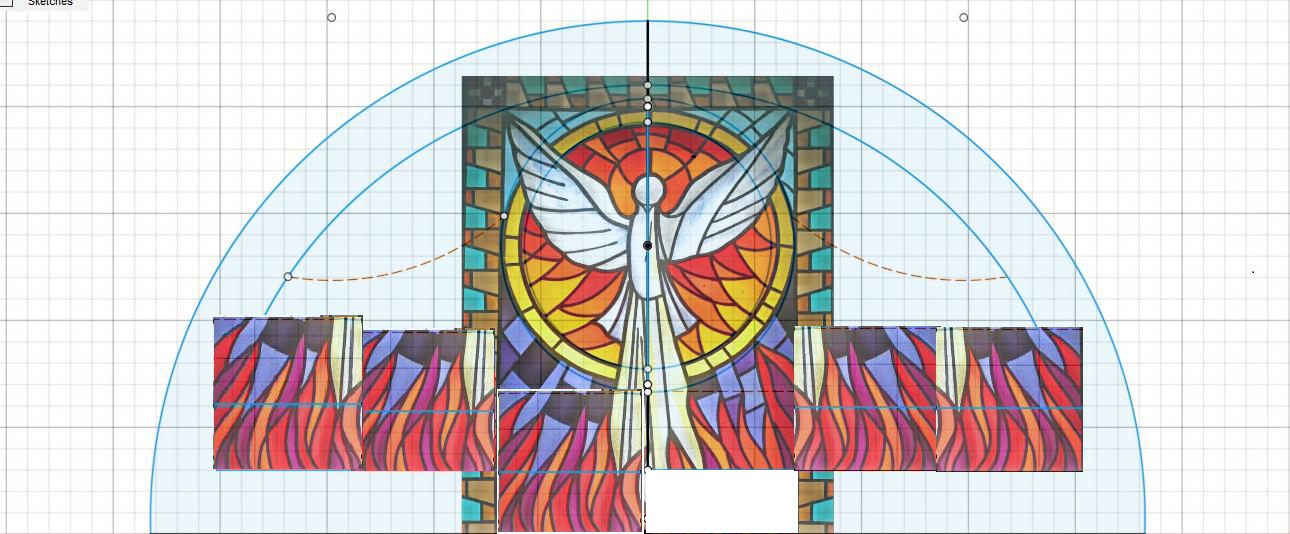
Transforming Stained Glass into 3D Form
This was not a simple trace.
The objective was to reinterpret the illustration into a layered 3D relief suitable for fabrication and presentation within a handmade arched box frame.
The central winged figure was carefully positioned to establish balance and authority within the composition. The flames were engineered to project forward, and the circular halo was structured to support both depth and visual flow.
The final CAD model incorporated seven distinct height levels.
These layers were introduced to:
Create natural shadow depth
Separate foreground from background
Enhance visual hierarchy
Ensure structural integrity for production
As the viewer moves around the finished piece, the relief reveals itself gradually. Light interacts with each level differently, giving the artwork presence rather than flatness.
Precision Engineering Meets Craftsmanship
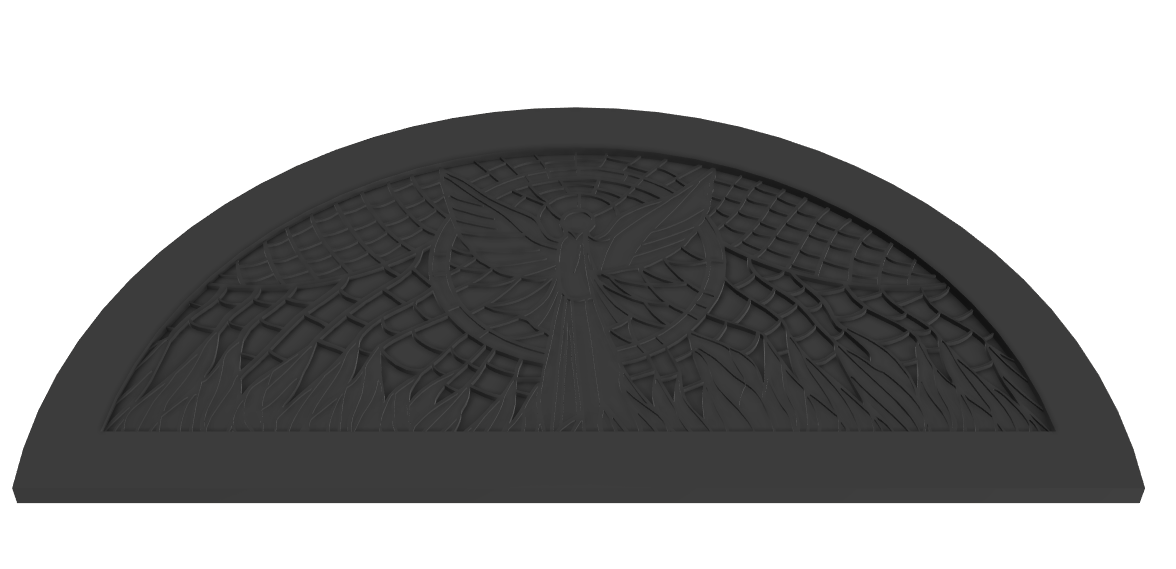
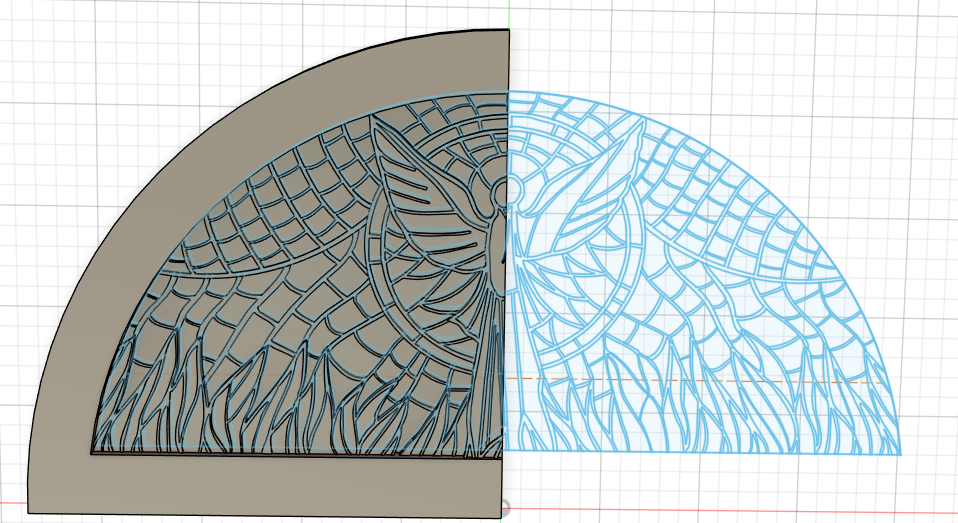
One of the main challenges was the absence of symmetry in the original stained-glass image.
Because the composition could not be mirrored, every curve, feather, flame, and geometric segment had to be drawn individually in CAD. Organic stained-glass lines were rebuilt using precise vector geometry — soft in appearance, but exact in execution — ensuring manufacturability while preserving the character of traditional ecclesiastical artwork.
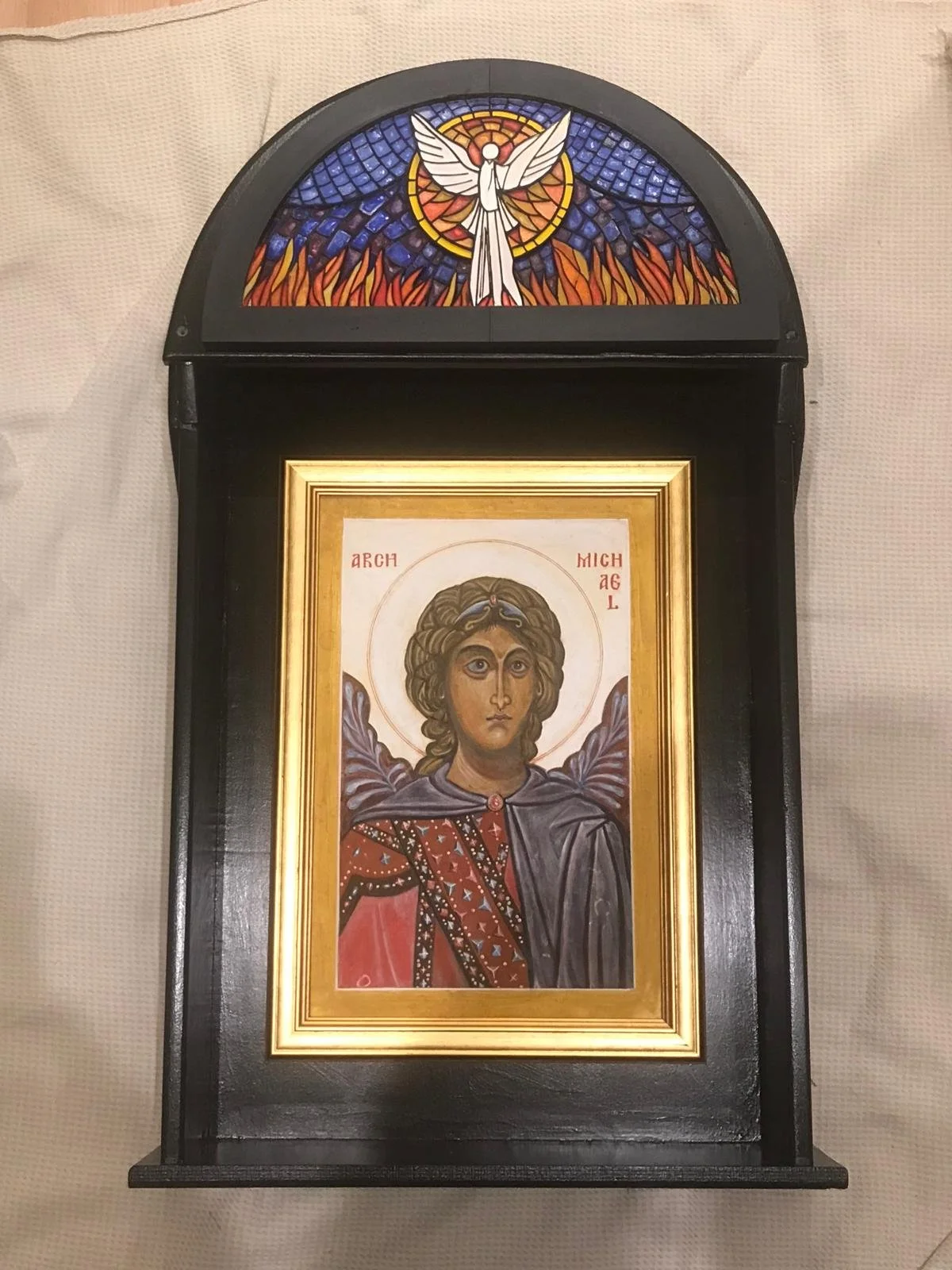
Once produced in black and white, the recessed white areas were intentionally designed to be hand-painted by the client.
Importantly, these areas were not set at a single uniform depth. They were constructed at varying height levels to deliberately control how light interacts with the surface.
By introducing subtle changes in elevation, the design creates natural shadow lines between elements. When light falls across the piece, raised sections catch illumination first, while deeper recessed areas remain softly shaded. This controlled variation enhances contrast, increases visual separation, and strengthens the overall three-dimensional effect.
As viewing angles change, highlights and shadows shift across the wings, flames, and structural contours. The piece feels dynamic — almost animated by light.
The hand-painted finish enhances this even further. Pigment settles differently across raised and recessed planes, reinforcing the sculptural hierarchy engineered into the CAD model.
This final stage does more than add colour. It introduces a personal, artisanal layer to an otherwise precisely engineered structure — completing the dialogue between digital precision and handcrafted expression.
A Modern Interpretation of Traditional Imagery
The completed relief sits within a handmade arched box frame, echoing the architectural curvature of traditional church windows. The layered design projects proudly forward, enhancing depth and presence.
Beneath the central winged figure, a hand-painted icon provides a strong visual anchor, grounding the composition both artistically and symbolically.
This project represents the intersection of:
Bespoke CAD modelling
3D relief fabrication
Ecclesiastical design reinterpretation
Layered architectural construction
Handcrafted framing
What began as coloured glass became dimensional form.
It is technically engineered, artistically expressive, and designed to be experienced from multiple perspectives — a contemporary interpretation of a timeless visual tradition.